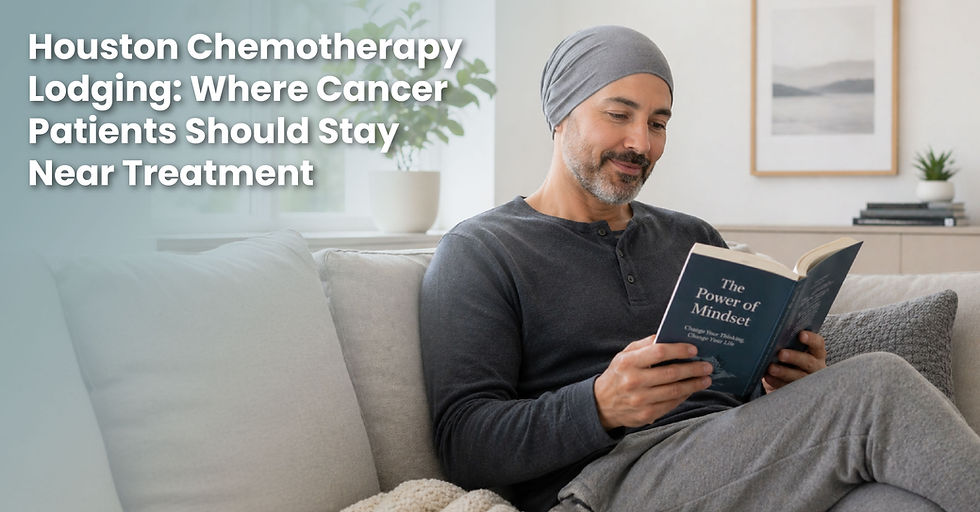
Real Families, Real Stories: Why Housing Matters During Medical Care
When medical crises strike, having a safe place to stay becomes part of the cure. For families traveling for treatment, whether for cancer care, complex surgery, or long-term therapies, stable housing is more than just shelter. It’s a cornerstone of health. In fact, research and real-world experience alike show that patients with secure, comfortable lodging recover better, stick to treatment plans, and even spend less on healthcare. Conversely, the stresses of housing instability, eviction notices, shelters, or crowded temporary arrangements can derail care. “Research shows that people who lose their homes are far less likely to adhere to medication regimens, attend appointments, or manage their mental health conditions,” notes a recent healthcare analysis.

In Houston and beyond, patient housing programs are springing up to fill this gap. Nonprofits like Ronald McDonald House and ACS Hope Lodge provide home-like environments, and health systems are partnering with housing agencies to get patients off the street. One American Cancer Society patient put it simply: “Just having a place to stay takes a lot of stress off… It just makes you happier, not having to worry day by day.” Her story is one of many illustrating how a “home away from home” can turn a healthy journey from crisis mode into recovery.
Medical Accommodations exist to connect families with exactly these healing-friendly rentals. Our fully furnished apartments near the Texas Medical Center (and nationwide) give patients and caregivers a calm base to rest, eat healthy meals, and stay together with all the essential ingredients for healing. Below, we explore why housing stability is a critical part of healthcare, drawing on studies, patient stories, and practical guidance. You’ll learn how the right housing can improve adherence, lower hospital visits, protect emotional well-being, and keep families strong during treatment.
Housing as a Key Social Determinant of Health
It's often said that housing is healthcare. Indeed, where and how people live has a major impact on their health outcomes. This is recognized by public health experts: stable housing is one of the “major pathways” that sustains health equity. Conversely, poor housing or homelessness can directly cause and worsen illnesses. According to the U.S. Department of Health, living without secure shelter can lead to chronic stress, infections, and lack of nutrition all precursors to diseases like asthma, diabetes, and heart conditions. In Houston and nationwide, families without stable homes face longer hospital stays and greater health risks.
“Housing affects health in profound ways. People who suffer chronic homelessness have a much shorter life expectancy and far higher rates of chronic illnesses such as diabetes, heart disease, and mental health disorders. Homelessness can create new health problems and exacerbate old ones.”
This isn’t just theory. AAMC reports show that, “When [housing is] not available, [patients] often rely on emergency departments using them as shelters”. Derrick Lyons, a Chicago man with diabetes, used the hospital ER as his warm bed when he had nowhere else to go. After he was connected to permanent housing through a local health housing program, his health stabilized dramatically. His story illustrates what happens when stable housing replaces street survival: patients finally have a chance to focus on healing instead of just getting by day to day.
The Four Pillars of Housing and Health
Experts often describe housing’s health impact along four dimensions:
Housing Conditions & Quality:
Safe, well-maintained homes (no mold, pests, toxins) prevent disease and injuries. Good lighting, ventilation, and space support physical and mental health.
Affordability:
If rent or mortgage consumes too much of a family’s budget, they may skimp on food or medications. Unaffordable housing is directly linked to worse health outcomes. Families under severe housing cost-burden report more chronic stress, depression, and disease.
Stability (Consistency):
Being forced to move frequently because of eviction, doubling up, or insecurity causes major disruptions. Frequent moves break continuity of care and social support, and each move adds stress and the risk of missing medical appointments. Imagine a cancer patient who must leave her apartment mid-treatment because of eviction; her chemotherapy schedule and emotional recovery are both put in jeopardy.
Neighborhood Context:
Even a stable apartment in an unhealthy neighborhood can harm recovery. Lack of nearby healthcare, poor air quality, or unsafe streets make it harder to get follow-up care or go for walks. Conversely, living near parks, grocery stores, and social networks supports a patient’s well-being.
Each of these pillars plays a role in recovery and care. Medical Accommodations focuses on offering affordable, accessible apartments near hospitals, with features that address these needs. For example, many of our listings include in-unit air conditioning and quiet environments (eliminating temperature/pollution hazards), kitchens and utilities included (improving affordability and nutrition), and are in safe, walkable neighborhoods near TMC (supporting context and easy clinic access).
How Stable Housing Improves Treatment Outcomes
When housing is secure and comfortable, patients and families experience a cascade of health benefits. We break these down into key areas:
Improved Adherence to Treatment Plans
Adhering to medications and appointments is critical, especially for chronic illnesses or long treatment courses. Unfortunately, housing instability severely undermines this. Studies find that once people lose stable housing, medication non-adherence skyrockets and follow-up visits plummet. A MedCity News analysis notes flatly: “People facing eviction or crushing rent burdens rarely… tell their doctor until they are already homeless or at risk.” by then, their conditions worsen as they skip drugs and appointments.
Patients without a safe home face impossible choices: pay rent or buy insulin? Wait in an ER line to escape the cold? These trade-offs harm health. In stark numbers, people who lose their homes are far less likely to manage their medications or attend scheduled care.
Conversely, having a secure home supports adherence. A furnished apartment gives patients a place to keep medications properly (e.g., refrigeration if needed), prepare meals on schedule (important for diabetic diets or chemo nutrition), and rest so they can take medicines on time. Families report that living together in one place, rather than shuffling between motels or shelters, makes it far easier to follow treatment.
“Without a stable place to stay, it is nearly impossible for patients to manage chronic illnesses, follow medication regimens, or attend crucial follow-up appointments”. Secure housing anchors patients to their care network.
What you can do: If rent is overwhelming, ask your doctor or social worker about resources (see below). Some nonprofits and state programs can assist with rent or lodging for medical needs. Small interventions like an ACS Patient Housing grant can cover hotel stays or rent deposits, keeping you on track with treatment.
Reduced Hospitalizations and Readmissions
When patients have stable housing, hospitals see fewer avoidable readmissions and ER visits. Homelessness and housing crises drive up acute care costs. One healthcare study found that homeless patients had a 42.8% 30-day readmission rate versus 19.9% for those with homes, a 2.6-fold increase in readmission risk. In plain terms, people without a stable home are far more likely to return to the hospital soon after discharge, often because complications (infections, medication issues, falls) could not be managed at “home”.
By contrast, stable housing interrupts this cycle. When a discharge plan includes a warm bed rather than the street, patients heal without exposure to the usual hazards of homelessness. State Medicaid pilots confirm the savings: after arranging stable housing for high-need patients, one study saw Medicaid spending drop 12%, and emergency visits drop 18%. In Oregon, stable housing meant 18% fewer ER trips and more primary care, exactly the opposite of typical high-cost utilization.
Hospitals are noticing this firsthand. Nationwide, many health systems have begun investing in affordable housing or partnering with agencies. For example, the Chicago “Housing First” program (Flexible Housing Pool) has moved hundreds of frequent ER visitors into permanent homes. Providers report that “when [housing needs] are not met, patients cycling back into emergency departments increases”, whereas permanent housing gives them a stable platform to focus on health.
In Houston specifically, Memorial Hermann and Methodist hospital networks list preferred lodging partners for patients, recognizing that long car rides or motel stress can lead to worse recovery. By staying near your hospital (e.g. in a Medical Accommodations apartment), you ensure quicker ER access if needed and reduce fatigue, lowering the chance of another admission.
Quick Takeaway: Stable housing breaks the cycle of repeat hospitalizations. Every empty hospital bed is a win for the system and for patients, because it means fewer complications and more healing at home.
Faster Recovery and Lower Infection Risk
Home-like lodging promotes faster healing. Patients in familiar, comfortable environments get better rest and nutrition, which are essential for tissue repair and immune function. Sleep experts note that uninterrupted, quality sleep is rarely achieved in noisy hospital wards or budget hotels. In a quiet furnished apartment, patients can “sleep like normal people” again. Better sleep lowers stress hormones and allows the body to use energy for repair, not constant alertness.
Importantly, a private setting also reduces infection risk. Hospitals teem with germs. By the time a patient is discharged, even if they are well enough to leave, their immune system is often taxed. Avoiding an extended stay in a ward means a lower chance of hospital-acquired infections. In fact, researchers point out that caring for patients in home-like settings (even specialized hospital-at-home programs) cuts down on drug-resistant bugs. Though inconvenient, stepping out of the hospital environment can literally keep patients healthier.
Also, in an apartment, you have more control over your nutrition and mobility. You can cook healthy meals rich in protein and vitamins (critical for healing), rather than relying on standardized hospital food. You can get up, walk around, and do gentle exercises at your own pace, something very limited in a hospital room. All these factors rest, diet,and exercise accumulate into quicker recoveries.
Better Mental Health and Family Support
Housing isn’t just a physical shelter; it’s an emotional one. Patients who feel secure and supported at home (or in a homey lodge) recover not just in body, but in spirit. Anxiety, depression, and stress can all impede healing. Studies consistently show that patients with strong social support have better outcomes. Conversely, housing insecurity itself is a mental health stressor.
Think of it this way: when a patient or caregiver lies awake worrying about housing, they’re sending stress signals (cortisol, adrenaline) through their system. That stress weakens immunity and hampers recovery. One social worker explains that having a stable home allows a patient to fully “focus resources on healing rather than reacting to anxiety”.
Here’s where family presence makes a difference. A Medical Accommodations client, “Holly,” described staying at the American Cancer Society Hope Lodge during chemo. She said simply, “Just having a place to stay takes a lot of stress off…It just makes you happier, not having to worry day by day.”. In other words, knowing “home” is secure helped lift her mood. Another Houston resource, Ronald McDonald House, highlights that “families are stronger when they battle a medical crisis together.” They provide 70 private bedrooms and community kitchens so parents can rest and regroup while keeping children close to treatment.
These settings foster a sense of community, too. Parents of pediatric patients at Ronald McDonald House often form support networks with each other, trading tips and simply empathizing. Similarly, many adult oncology programs report that peer support groups and shared patient lounges help people cope. Even informal “day rooms” where families gather can ease loneliness. When emotional weight is shared, patients feel relief, and relief boosts healing.
Continuity of Care: Finally, stable housing means you can keep treating the whole family unit. One sobering reality is that without housing, family separations sometimes occur (e.g., kids entering foster care, or spouses sleeping on different couches). But programs that house entire families (like RMH or ACS Hope Lodge) prevent that break. Keeping the family intact has long-term mental health benefits that cascade into the patient’s recovery.
Real Patient & Family Stories
Holly’s Story Relief at the Hope Lodge (Houston): Holly, a young mother diagnosed with breast cancer, spent weeks in Houston for chemotherapy. Her caregiver's daughter lived far away, and they worried about hotel costs. A social worker referred them to the newly opened Houston Hope Lodge. Holly recalls: “Just having a place to stay takes a lot of stress off… It just makes you happier, not having to worry day by day.”. With free accommodations, a full kitchen, and other patients around, Holly could focus on her treatments. She and her daughter cooked healthy meals together and slept soundly at night comforts that lifted Holly’s spirit throughout recovery. After returning home, Holly’s healthcare team noted she required less pain medication and fewer anti-anxiety meds than expected, which Holly attributes to the restful atmosphere of the Lodge.
Derrick’s Story Housing First Works (Chicago): Derrick Lyons, 61, had uncontrolled diabetes and high blood pressure. He was also chronically homeless, using the ER as a shelter on cold nights. Three years ago, a hospital outreach team connected him to Chicago’s Flexible Housing Pool. That program gave him a permanent apartment and case management. “All of that changed… I had to get up and stay busy, instead of resting on the stretcher,” Lyons says. With housing, he re-engaged in his diabetes care. Doctors credit this stability with reducing his emergency visits and improving his overall health. While not in Houston, Derrick’s experience is emblematic of what happens when hospitals partner with housing providers: an empowered patient and greatly reduced costs.
Children’s Stories Ronald McDonald House (Houston): Every week, newborns and kids in ICU see their parents sleeping just a few halls away, not on hard benches. The Holcombe House Ronald McDonald facility in Houston has 70 family suites and communal kitchens. One father told local media that after his infant’s heart surgery, he could rest “a whole night through” in the House, something impossible at a hospital bench. The House’s staff report countless similar notes of gratitude. Their website captures it: “We preserve a sense of normalcy… with freshly prepared meals, comfortable beds, and recreational activities”, and crucially, they keep “families together, steps from their child’s medical treatment.” These spaces turn a medical marathon into a human experience of hope.
Multiple Chronic Conditions : A Family Anchor: In many cancer centers, siblings sleeping in one small motel room lead disparate schedules and stress. The Ramiro family in Texas had children in and out of MD Anderson’s ICU for months. They were worried about bills and sleeping apart. A care coordinator put them in a Patient Housing nonprofit apartment. One of the Ramiro children later said, “I knew mom was right across the street. I could sleep in the same bed every night.” Their doctors noticed quicker gains in the children’s rehabilitation, attributing it in part to the family’s reduced anxiety.
These stories share a theme: secure, supportive lodging turns ordeal into resilience. Patients trade fear for focus, and families trade anxiety for community.
Housing Programs and Partnerships
Thanks to recognition of these benefits, more programs now exist to bridge the gap between hospitals and homes. If you’re on a medical journey, it’s worth knowing the options:
Patient Housing Networks:
Many cities have nonprofits dedicated to this. In Houston, the American Cancer Society’s Hope Lodge offers free rooms and kitchens to cancer patients who qualify. Guests average two-week stays, saving thousands in lodging. Similarly, Ronald McDonald House (multiple locations around TMC) provides rooms for families of pediatric patients. These places go beyond a bed and volunteers help with meals and rides, creating a supportive community. Nationally, Joe’s House is an online directory helping families find lodging near 2,100 U.S. cancer centers, often aggregating special hospital rates or free options.
Healthcare Hospitality Houses:
Some hospitals host their own or affiliated apartments. For instance, Hospitality Apartments (affiliated with Memorial Hermann) provides rent-free apartments to patients and families traveling for care. Mercy House Ministries (a church program) offers shared rooms, meals, and transportation in a “home-like” environment. Even overnight sleeping rooms at homes like Ronald McDonald Lounges (quiet rooms inside hospitals) let tired parents get a nap between shifts at the hospital.
Medical Respite and Transitional Programs:
For homeless patients specifically, medical respite (also called recuperative care) is a short-term lodging program. If a patient is discharged but still needs rest and basic care, some communities (and even Medi-Cal plans) cover stays in a respite home until they can safely return to shelter or independent living. For example, a family member might help cover a night or two in a supervised facility or charitable program when a patient can’t be alone but doesn’t need ICU-level care.
Supportive Housing Initiatives:
Beyond short-term stays, there’s a broader movement of “housing is healthcare.” Some health systems are funding affordable apartment developments near their campuses or offering rental assistance for patients. Notably, many Medicaid programs (like California’s CalAIM) now allow housing transition services: they can pay deposits, short-term rent, or connect eligible patients to housing navigation services. Colorado, Massachusetts, Louisiana ,and other states have Medicaid waivers that cover tenancy support. In practice, this means a hospital social worker can sometimes get a medically vulnerable patient a rental voucher or landlord help a lifesaver to keep them housed.
In short, there is help out there though availability can vary. If you or a loved one needs housing support, start by asking your hospital’s social work or patient advocacy office. They often have lists of local non-profits or grants. Many hospitals post resources online (for example, MD Anderson’s site links to Joe’s House and local lodging info). Online communities like Patients Rising also compile directories of free lodging programs.
And of course, Medical Accommodations stands ready to help families find affordable, short-term apartments. We focus on properties near Houston’s hospitals, many offering special rates for medical stays. Our listings come move-in ready, including Wi-Fi, utilities, and kitchens so families can settle in immediately and reduce day-to-day stress.
Getting Support: Practical Steps
Plan Ahead: If you know you’ll need multiple visits or extended stays, start looking early. Book with flexible cancellation or sliding scale policies. Consider vacation rentals or extended-stay hotels only if furnished apartments are full. Use resources like Medical Accommodations to browse short-term rentals near your hospital.
Use Hospital Resources: Many hospitals offer concierge or housing assistance services to patients. They may help negotiate hotel rates or refer you to patient lodging partners. For example, Mayo Clinic offers a free concierge for travel lodging. TX Medical Center hospitals may have similar support.
Check Eligibility for Free Programs: If you’re being treated for cancer, Alzheimer’s, or other serious illness, see if you qualify for Hope Lodge or a Ronald McDonald House (criteria are often simply that treatment is needed a certain distance from home). These services operate on a first-come basis, so contact them early.
Explore Grants & Charities: Organizations like Medical Accommodations offer grants for medical travel expenses, including housing. Also, some hospitals or local charities (e.g., Church foundations) have small funds for lodging.
Use Insurance/Medicaid Supports: If you are on Medicaid, check if your plan covers any housing support. For example, in California, under CalAIM, your plan may help with transitional housing or rent assistance. Some Medicare Advantage plans also offer care management that includes transportation and limited housing support.
Pack Smart: Finally, a little prep goes a long way. Follow our Houston Medical Travel Checklist and What to Pack for Houston guides so you and your family have everything you need. Bringing favorite comfort items (pillows, games, snacks) makes any temporary home feel more normal. Pack a small first-aid kit and your prescriptions to avoid extra pharmacy runs. If there’s a nearby grocery delivery service or hospital café, plan for meals as well.
No family should have to sacrifice their child’s pediatric surgery to afford rent, or wake up in a hotel away from each other during a crisis. The costs of ignoring patient housing are high for families’ health and for the healthcare system. When families share real stories of struggling with or finding housing, one lesson rings clear: safe, stable housing is an essential part of care.
Medical Accommodations is proud to provide hundreds of "home away from home" apartments each year to Houston’s medical travelers. Let us help you focus on healing by taking the stress out of lodging. See our Medical Center Apartments Guide for tips on picking the right unit, and explore neighborhoods in our Best Houston TMC Rentals post to find the most convenient areas. Together with these resources and the support programs above, we can make your medical journey a little easier.
FAQs
How does housing affect healthcare?
A:- Housing is one of the most important social determinants of health. Stable, affordable housing improves nutrition, rest, and mental well-being, enabling patients to stick to treatment and avoid complications. By contrast, housing instability (eviction, homelessness) causes stress, missed medications, and higher ER usage. For example, patients without homes often have 2-3 times higher hospital readmission rates than those in stable housing.
What are the four pillars of housing and health?
A:- Experts identify four key dimensions: Conditions (quality) of the home (no mold or hazards), affordability (housing must not consume an unhealthy share of income), stability (freedom from eviction or frequent moves), and neighborhood context (access to resources and safety). Housing insecurity in any pillar can harm health outcomes.
Does Medi-Cal (California Medicaid) help with housing?
A:- Yes, under recent reforms. California’s Medi-Cal has a “CalAIM” initiative that provides Community Supports specifically for housing. This includes services like rental deposits, short-term post-hospital housing, and tenancy support for qualifying enrollees. Other states have similar Medicaid waivers, though typically for disabled or high-risk patients. However, standard health insurance and Medicare generally do not pay for room & board.
What is the connection between homelessness and health?
A:- Homelessness and health are deeply intertwined. Chronically homeless individuals have much poorer health: shorter lifespans, higher rates of infectious disease, mental illness, and chronic conditions like diabetes and hypertension. The lack of a clean, safe home impedes routine care (med storage, cooking, hygiene), so illnesses escalate. Hospitals often become de facto shelters, an expensive, ineffective way to meet patients’ needs. Stable housing breaks this cycle, acting as a form of treatment itself.
How do housing programs help families stay together?
A:- Organizations like Ronald McDonald House and multi-bedroom apartments allow entire families (parents and siblings) to stay under one roof. This prevents children from being separated or sleeping alone. Keeping families together provides emotional support critical for recovery. Many programs serve the whole family for example, Serenity House in Minnesota rents 2-3 bedroom units to entire families during cancer treatment.
Can stable housing reduce recovery time?
A:- Absolutely. In a home-like setting, patients sleep better, eat well, and move around more freely all of which speed healing. Anecdotally, doctors note patients with stable lodging often show faster wound healing and need fewer readmissions. Empirical studies back this up: for instance, people recently given housing had 18% fewer ER visits and lower overall health spending. So a comfortable place to recover can literally shorten the length of recovery and hospital follow-ups.
Are there affordable short-term rentals near Houston’s hospitals?
A:- Yes. Houston has many fully furnished apartments catering to medical stays. These typically offer short leases (days to weeks), utilities included, and are located within a few blocks of the Texas Medical Center. Medical Accommodations lists dozens of such options. Many patients prefer these over hotels, since they allow cooking and family members to stay. For tips on choosing the right unit, see our Medical Center Apartments Guide.
What if I can’t afford lodging costs?
A:- Ask for help. Social workers can point you to grants (e.g. ACS Patient Travel Grants), fundraising sites, or churches offering patient assistance. Many hospitals have a charity fund for indigent patients. Also consider “workcations” like volunteering for lodging (some cancer centers have volunteer host programs) or short-term rentals listed at low cost.
What does a medical respite (recuperative care) facility provide?
A:- If you are too sick to go home but not ill enough for hospital, a medical respite offers a safe recovery bed. These programs give a private room or supervised dorm, nursing or aide visits, and help with meds and basic needs for a short period (usually up to 30 days). It’s designed for people who are homeless or housing-insecure so they have a step-down option before returning to independent living.
How can I find the best neighborhood for medical lodging in Houston?
A:- Proximity and convenience matter. Areas like the Museum District, Med Center’s Main Street, and Upper Kirby have many medical condos and apartments minutes from MD Anderson, Texas Children’s, and Methodist. Our Best Neighborhoods guide maps out the safest, most walkable sections near each hospital cluster. Even if slightly farther, consider locations with good METRORail or shuttle access Houston’s Medical Center Trolley can connect visitors to TMC hospitals for free.
Each patient’s situation is unique, but the consensus is clear: housing is healing. By sharing resources and stories, families empower each other to get through tough treatments. With the right support, real families everywhere find that a stable home makes all the difference in beating illness.